
Future-Proofing Your Building: How the 2024 IECC, IRA Funding, and Building Performance Standards Will Reshape Metering Requirements
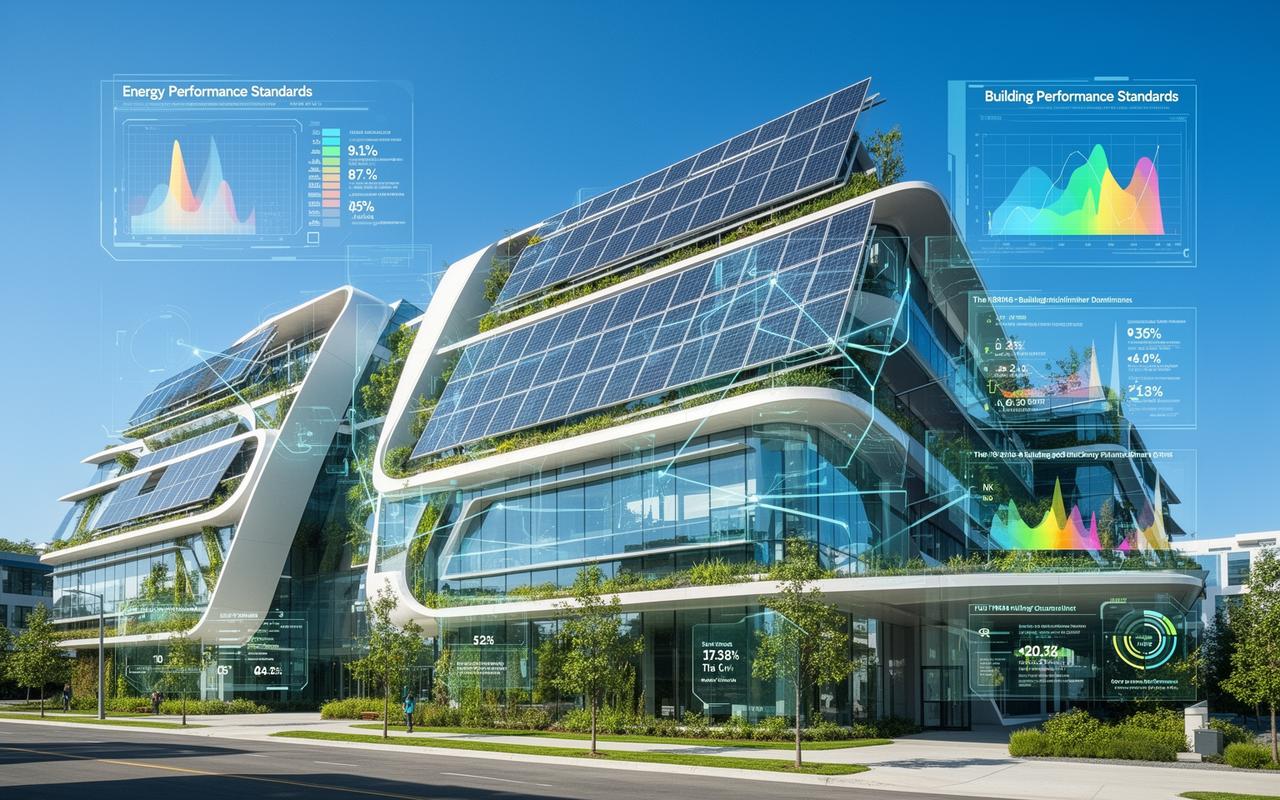
The 2024 International Energy Conservation Code (IECC) changes how commercial buildings monitor energy. It requires more detailed energy metering. Funding from the Inflation Reduction Act (IRA) and new Building Performance Standards (BPS) also impact buildings. Owners and operators now have reasons to upgrade their metering infrastructure.
The 2024 IECC: What Changed
The 2024 IECC expands on 2021 energy monitoring rules. The 2021 code required whole-building energy monitoring. The 2024 version mandates more specific submetering.
Buildings over 25,000 sq ft must install meters. These meters track HVAC, lighting, and process loads over 50 kW. This helps identify inefficiencies better than whole-building data alone. Operators can pinpoint underperforming systems.
Data accessibility is also a key feature:
- Intervals: Metering systems must record data every 15 minutes or less.
- Access: Data must be available through a building automation system (BAS) or energy management platform.
- Compliance: Simple pulse-output meters are no longer enough for compliance.
IRA Funding: Making Compliance Affordable
The Inflation Reduction Act (IRA) offers funds for energy efficiency. Several parts of the IRA help with metering upgrades.
- Section 179D Enhanced Deductions: Buildings can deduct up to $5 per square foot. This applies to those meeting energy efficiency targets. Bonus provisions exist for projects meeting wage and apprenticeship rules. Metering helps buildings qualify for these deductions.
- Section 48 Investment Tax Credits: This expands tax credits for energy property. This includes some energy monitoring and control equipment. Systems like combined heat and power can get up to 30% credits. Energy metering is vital for these systems.
- State Energy Program Grants: The IRA gives $500 million to State Energy Programs. Many states use this for benchmarking and metering programs. Grants specifically target commercial building metering infrastructure upgrades.
- Green Banks and PACE Financing: The IRA created a national green bank with $27 billion. Many local green banks and PACE programs now include metering as an eligible improvement. Building owners can finance upgrades through property tax assessments.
Building Performance Standards: The Regulatory Driver
Building Performance Standards (BPS) are accelerating metering adoption. Over 40 jurisdictions have BPS policies. These standards set energy targets for existing buildings. They also impose penalties for not meeting these targets.
Examples of BPS:
- New York City's Local Law 97: Set carbon emission limits for buildings over 25,000 sq ft in 2024. Penalties are $268 per metric ton of CO2 equivalent for exceeding limits.
- Washington, D.C.'s Building Energy Performance Standards: Requires buildings to meet tougher targets every five years. The first period is 2021-2026.
- Boston's Building Emissions Reduction and Disclosure Ordinance (BERDO): Has similar requirements.
These programs all require accurate energy data. You cannot manage energy without measuring it. Verifiable metering data is essential for compliance.
The Convergence Effect
Three forces are currently converging.
- Code requirements set a baseline for new construction.
- IRA funding makes compliance affordable.
- BPS policies extend metering to existing buildings.
For building owners, metering is no longer optional. It is crucial for operations, compliance, and finances. The focus is on effective metering implementation.
Strategic Metering Implementation
A strategic approach to metering is essential.
- Start with a metering plan: Identify energy sources, major loads, and data needs. This includes compliance, BPS reporting, and optimization.
- Choose scalable platforms: Select hardware and software that can grow. Cloud-based energy management platforms offer flexibility.
- Prioritize high-impact meters: Focus on meters that provide the most insight. HVAC systems typically use 40-60% of commercial building energy.
- Integrate with existing systems: Modern metering solutions can connect with BAS, utility data, and benchmarking platforms.
- Plan for reporting: Ensure your system can generate reports. These are needed for BPS, ENERGY STAR, and internal communication.
Looking Ahead
Energy metering requirements will continue to grow. The 2027 IECC cycle is already in progress. Proposals may extend submetering to buildings as small as 10,000 sq ft. Federal BPS are being discussed. More cities are adopting BPS policies.
Investing in comprehensive metering now is smart. It helps with future compliance and performance. It also helps with financial incentives. Delays will lead to costly retrofits and potential penalties.
At Emergent Metering, we help building owners navigate these changes. Our team develops metering strategies. These strategies meet code, ensure BPS compliance, and maximize IRA incentives. Contact us for a consultation. Start future-proofing your building today.
The Strategic Advantage of Early Adoption
Putting metering infrastructure in place early has benefits beyond compliance.
- Establish baselines: Early adopters get energy data during normal operations. This is before regulatory pressure. This baseline data helps show improvement. It also aids in discussions with regulators.
- Operational savings: Metering starts saving money immediately. Circuit-level monitoring can save 10–25% in the first year. For a building spending $300,000 annually on energy, that is $30,000–$75,000 in annual savings.
- Avoid supply chain issues: The demand for metering equipment and installers will rise. Acting early ensures faster installation and better pricing. The 2021 IECC caused delays. The 2024 IECC will create even greater demand.
Connecting the Dots: IECC + IRA + BPS
These three forces create a good environment for metering investment.
- IECC: Defines what metering infrastructure to install.
- IRA: Helps pay for the upgrades.
- BPS: Provides financial reasons to act now.
For owners in areas with both 2024 IECC and local BPS, metering serves two purposes. It meets code for new construction. It also provides data for BPS compliance.
Financial benefits are clear:
- A typical metering upgrade for 100,000 sq ft costs $20,000–$40,000.
- IRA incentives can cover 20–40% of this cost.
- Annual energy savings of 10–25% (at $2.50/sf energy cost) yield $25,000–$62,500.
- Avoided BPS penalties can reach $50,000–$200,000 or more per year.
The payback for metering investment is often under 12 months. This is after incentives, savings, and avoided penalties. Few capital improvements offer such a return.
What Smart Building Owners Are Doing Now
Smart building owners see this as an opportunity. They install metering infrastructure beyond current code. They expect future codes to be stricter.
They are specifically doing the following:
- Deploying circuit-level monitoring on HVAC, lighting, and process loads. This goes beyond the minimum code requirements.
- Using data to optimize operations now. They are building historical data for future compliance.
- Leveraging IRA incentives. This minimizes costs and maximizes long-term metering investment value.
Granular energy metering is becoming essential. The regulatory trend confirms this. The choice is proactive installation and savings. Or, it's waiting until forced, facing supply chain issues.
Related Articles
Green Building United 2026 Sustainability Symposium: What to Expect After a Landmark 2025 Event
Mar 14, 2026 · 8 min read read
Energy Code Compliance Is Coming for Your Building — Are You Ready?
Mar 10, 2026 · 8 min read read
LCFS EV Charging Credits in 2026: How Metering Unlocks Maximum Credit Revenue
Mar 5, 2026 · 10 min read
About Emergent Metering Solutions
Emergent Metering Solutions provides commercial and industrial metering hardware, installation support, and energy analytics services. We specialize in electric meters, water meters, BTU meters, compressed air meters, gas meters, and steam meters with Modbus RTU, BACnet IP, pulse output, and wireless communication options. Our Managed Intelligence services deliver automated reporting, anomaly detection, tenant billing, and AI-powered consumption forecasting. We support compliance with IECC 2021, ASHRAE 90.1-2022, NYC Local Law 97, Boston BERDO 2.0, DC BEPS, California LCFS, and EU CSRD requirements.
Contact our engineering team for meter selection guidance, system design, and project quotes.