
Energy Monitoring for Healthcare Facilities: Why Hospitals and Medical Centers Are the Ideal Candidate for Non-Invasive Metering
Healthcare: The Most Energy-Intensive Commercial Sector
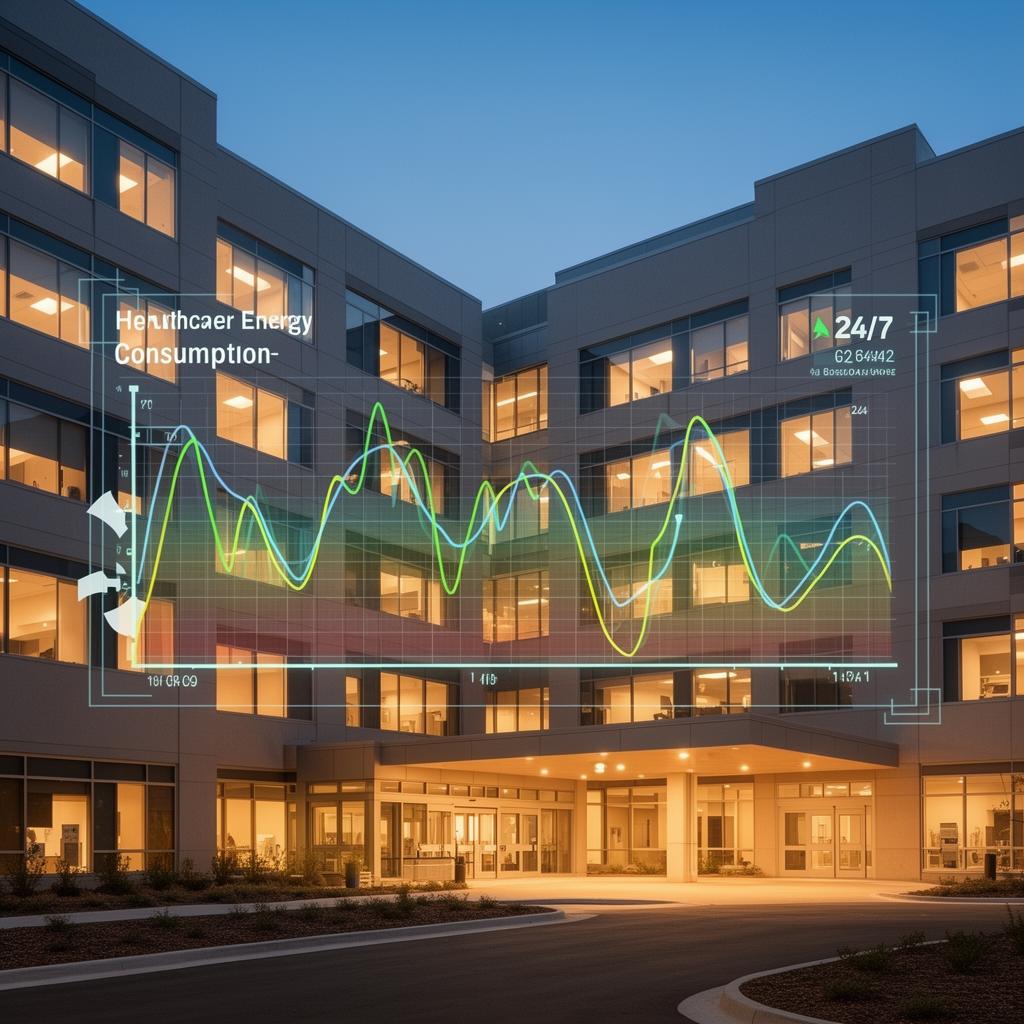
Energy monitoring is crucial for healthcare facilities. Hospitals and medical centers use more energy than almost any other commercial building. This makes them ideal candidates for non-invasive energy metering.
The U.S. Energy Information Administration states that hospitals use about 250 kBtu per square foot each year. This is 2.5 times more than a typical office building. A mid-sized hospital could pay $2–$4 million annually for energy. This depends on local utility rates and climate.
Why Hospitals Use So Much Energy
Hospitals operate non-stop, 24/7. They need strict temperature and humidity controls. This ensures patient comfort and good infection control. It also protects stored medicines.
Medical imaging equipment uses a lot of energy. MRI machines, CT scanners, and linear accelerators can pull hundreds of kilowatts. Hospitals also run commercial kitchens, laundries, and sterilization equipment. Data centers add to their energy load. Redundant systems must always be on for emergencies.
The Problem: Hidden Energy Use
Despite high energy use, many facilities don't see where their energy goes. Building automation systems track HVAC. But they often miss plug loads, medical equipment, and kitchen use. These hidden uses can be 30–40% of total consumption. This means facility teams cannot fully understand their energy costs. They also can't fully optimize them.
Why Energy Monitoring Adoption Has Been Slow in Healthcare
Healthcare facilities gain the most from energy monitoring. So why have they been slow to adopt it? Three main factors have made monitoring difficult in clinical settings.
Shutdown Constraints
Traditional wired energy meters need electrical panel changes. This includes adding current transformers and running wires. Circuits often need to be briefly turned off.
In a hospital, circuit shutdowns require extensive planning. Clinical teams must be involved. Work often happens during small maintenance windows, like 2–4 AM. A full wired metering system could take months to install. It would need many shutdown events.
Infection Control Requirements
Any work near clinical areas must follow Infection Control Risk Assessment (ICRA) rules. Installation creates dust and debris. These can carry harmful germs. This is a big risk for patients with weak immune systems. ICRA compliance adds time, cost, and complexity to projects.
Clinical Workflow Disruption
Hospital managers dislike projects that disrupt patient care. Even short power outages on non-critical circuits can impact systems. These include electronic health records, nurse call systems, and medicine dispensers. Clinical staff rely on these systems every minute.
These problems are real. But, non-invasive wireless monitoring changes everything for healthcare.
Non-Invasive Monitoring: Designed for Clinical Environments
Panoramic Power wireless sensors solve all these historical barriers. They make energy monitoring possible in healthcare.
Zero-Shutdown Installation
Panoramic Power sensors clip onto existing wires. No electrical changes are needed. No wires to run. No panel changes. No circuits need to be shut off during installation.
A trained technician can install 30–50 sensors in one shift. This often happens during normal hours. It will not affect clinical systems.
No Dust, No Debris, No ICRA Concerns
Installation only involves clamping sensors inside electrical rooms. These are non-clinical spaces. No construction occurs in patient areas. No dust is created. No ceiling tiles are removed.
Therefore, no ICRA assessment is needed for the monitoring installation. This removes a major costly and time-consuming part of hospital projects.
Self-Powered, Maintenance-Free Operation
Each Panoramic Power sensor gets power from the circuit itself. There are no batteries to change. No external power connections to maintain. Hospital teams are busy. A maintenance-free monitoring system is a great advantage for them.
Wireless Data Transmission
Sensor data goes wirelessly to a bridge device. This device connects to the cloud via cellular service. It does not use the hospital's IT network. This means no IT department involvement is needed. No network security reviews. No integration with clinical networks.
For healthcare, strict IT security policies (HIPAA) are common. A monitoring system on a separate network simplifies approval greatly.
What Healthcare Facilities Discover with Power Monitoring
When hospitals use circuit-level monitoring, they find big savings. These opportunities were previously hidden.
HVAC Over-Conditioning
Hospital HVAC systems are built for tough conditions. Operating rooms need precise temperature and humidity. Isolation rooms need specific pressure. Medicine storage areas need exact temperatures. But not all hospital spaces need this level of control.
Monitoring often shows HVAC systems in administrative areas run too hard. They condition spaces like lobbies 24/7. These spaces are only used 8–10 hours a day. Adjusting schedules for non-clinical zones can cut HVAC energy by 15–25%. This happens without affecting patient care.
Medical Equipment Standby Power
Modern medical imaging devices use power even when not scanning. An MRI in standby can use 15–30 kW continuously. This costs $15,000–$30,000 per year per machine. Circuit-level monitoring shows real standby use. This helps with scheduling and power management.
Kitchen and Laundry Optimization
Hospital kitchens and laundries have set schedules. But their equipment often does not. Leaving steam tables on overnight wastes energy. Running empty dryers or dishwashers during peak times increases costs. Monitoring finds these simple fixes. They can save 10–20% in these departments.
Lighting and Plug Load Waste
LED lights have cut lighting energy in hospitals. But plug loads keep growing. This includes computers, monitors, printers, and chargers. Circuit-level monitoring measures plug load by department. It shows where automated power management can save money.
Demand Charge Optimization
Healthcare facilities have high demand charges. This is due to large electrical loads. One MRI scan can add 50–100 kW instantly. If this happens with kitchen startup and peak HVAC, it creates a demand peak. This peak sets the demand charge for the whole billing period.
Monitoring shows when demand peaks occur. It also shows which loads contribute. This allows targeted strategies. Schedule elective imaging to avoid other peaks. Stagger kitchen equipment startup. Coordinate laundry use with low-demand times. A 10–15% cut in demand charges can save a hospital $50,000–$75,000 annually. This comes from operational changes only, with no capital cost.
The Case for Health System Portfolios
The benefits grow for health systems with many facilities. These include hospitals, clinics, surgery centers, and long-term care facilities.
Cross-Facility Benchmarking
A health system with 15 locations can compare their energy use. If one clinic uses 40% more energy per square foot, monitoring shows why. It reveals if HVAC, lighting, medical equipment, or operations are the cause. This helps identify and share best practices faster.
Centralized Energy Management
A health system can centralize energy monitoring and analysis. One energy analyst can review data for all facilities. They can find opportunities, set priorities, and track progress on sustainability goals.
Capital Planning
Energy data provides clear proof for capital investments. If a hospital needs a new HVAC system, data showing a 25% drop in efficiency helps. This is a better reason than "the equipment is old." For health systems with limited funds, data-driven decisions mean better investments.
Regulatory and Sustainability Drivers for Healthcare
Healthcare groups face growing pressure to improve energy use.
Joint Commission and Energy
The Joint Commission's Environment of Care standards require hospitals to manage energy. They don't require specific monitoring tools. But hospitals must show they manage energy. They need plans to reduce environmental impact.
ESG Reporting
Health systems with public debt or institutional investors need verified energy data. This is also true for those in sustainability programs. Circuit-level monitoring provides accurate data. It avoids estimates often used when only utility bills are available.
Building Performance Standards
Healthcare facilities in some cities face mandatory emission targets. Examples include NYC LL97 and Boston BERDO. Hospitals are very energy-intensive. They are likely to face compliance issues. Early monitoring gives health systems data to plan ahead.
Decarbonization Commitments
Over 100 health systems signed the Department of Health and Human Services' climate pledge. This commits them to emission reduction goals. Meeting these goals requires understanding energy use in detail. Circuit-level monitoring provides this.
Implementation Approach for Healthcare with Emergent Metering
Emergent Metering uses a special approach for healthcare monitoring. It respects the unique needs of clinical environments.
-
Phase 1: Utility Room Survey (Week 1)
- Survey all electrical and mechanical rooms.
- Determine sensor and bridge device locations.
- Check cellular connectivity.
- This takes place in non-clinical areas.
-
Phase 2: Sensor Installation (Weeks 2–3)
- Install wireless sensors on major circuits.
- This occurs during normal business hours. No clinical coordination is needed.
- A typical hospital installation takes 3–5 days for 100–200 sensors.
-
Phase 3: Baseline Establishment (Weeks 3–6)
- Collect initial data from all monitored circuits.
- Verify data quality.
- Map circuits to building systems and departments.
-
Phase 4: Analysis and Quick Wins (Weeks 6–10)
- Find immediate ways to optimize. This includes adjusting schedules.
- Reduce standby power. Lower demand charges.
- Implement low-cost solutions.
-
Phase 5: Ongoing Optimization
- Transition to continuous monitoring.
- Use automated alerts.
- Conduct monthly performance reviews.
- Provide quarterly reports that align with sustainability and compliance goals.
The Bottom Line on Energy Monitoring Solutions
Healthcare facilities gain a lot from energy monitoring. But deployment can be challenging. Non-invasive wireless sensor technology solves this. It gives clear circuit-level visibility. There are no shutdowns, construction, or clinical disruptions with Emergent Metering solutions.
Hospitals spend $2–$4 million on energy annually. A typical 15–20% savings opportunity means $300,000–$800,000 per year. Payback periods are under 12 months.
Contact Emergent Metering Solutions to discuss energy monitoring for your healthcare facility, or learn more about Panoramic Power wireless sensors for non-invasive deployment options.
Ready to take the next step?
Let Emergent Energy show you what circuit-level monitoring can do for your facility.
About Emergent Metering Solutions
Emergent Metering Solutions provides commercial and industrial metering hardware, installation support, and energy analytics services. We specialize in electric meters, water meters, BTU meters, compressed air meters, gas meters, and steam meters with Modbus RTU, BACnet IP, pulse output, and wireless communication options. Our Managed Intelligence services deliver automated reporting, anomaly detection, tenant billing, and AI-powered consumption forecasting. We support compliance with IECC 2021, ASHRAE 90.1-2022, NYC Local Law 97, Boston BERDO 2.0, DC BEPS, California LCFS, and EU CSRD requirements.
Contact our engineering team for meter selection guidance, system design, and project quotes.