
Portfolio Energy Intelligence: Why the Single-Dashboard Approach Is Replacing Fragmented Utility Data for Multi-Site Operators
The Problem: Fragmented Energy Data for Multi-Site Operators
Multi-site operators face a common challenge. They manage many locations. Each site may have different utility providers and multiple **Emergent Metering** points. Rate structures vary widely. Energy data often comes as PDF invoices. These arrive at different times. An accounts payable team processes them for total dollars. The facilities team sees aggregated, outdated numbers in quarterly reports. This means issues are found too late. For example, a broken rooftop unit's high energy use might go unnoticed for months. This outdated system is costly. It is the norm for many businesses in 2026.What Are the True Costs of Energy Blind Spots?
We often find predictable patterns when deploying portfolio-wide monitoring. Total waste is usually 15–25% of a portfolio's annual energy spend. The sources of this waste are consistent.What is Ghost Consumption?
"Ghost consumption" is energy use when a facility should be idle. For a retail store, there is a baseline load for security. Anything above this baseline after closing is ghost consumption. It is almost always higher than expected. * **Impact**: Ghost consumption typically accounts for 8–15% of total energy use. * **Cost Example**: For a 200-site portfolio, this means $400,000–$1,500,000 lost yearly. * **Causes**: Common causes include HVAC scheduling errors, kitchen equipment left on, 24/7 signage, and stuck HVAC economizers. * **Visibility**: Utility bills show total kWh. They do not show ghost consumption. You cannot see it without circuit-level **Emergent Metering**.What is Demand Charge Inequity?
Some sites contribute more to demand charges. We find 20% of locations cause over 50% of total demand charges. These are sites where: * Equipment startup sequences are not staggered. * Peak shaving with generators or batteries is possible. * Simple changes like pre-cooling could help. Without interval-level demand data, demand charge reduction is guesswork. Monthly utility bills show peak demand. But they do not show when it occurred, what caused it, or if it's a pattern.What Are Maintenance Blind Spots?
Energy use patterns signal equipment health. This is true if you monitor at the circuit level. A compressor drawing 20% more current may have dirty coils. It could have a refrigerant issue or worn bearings. Addressing this early makes it routine maintenance. * **Cost Savings**: Emergency repairs cost 3–5x more than planned repairs. This includes shipping, labor, product loss, and customer impact. * **Benefits**: Predictive maintenance is highly valuable for multi-site operators.The Solution: A Single-Dashboard Approach
The solution is simple: 1. Deploy wireless energy sensors at every site. 2. Stream all data to one cloud platform. 3. Use the platform for automated monitoring, benchmarking, alerts, and reports. This was once difficult. Now, wireless sensors and cloud analytics make it practical. This applies even for portfolios of 500+ sites.How Do Wireless Sensors Help with Deployment?
Multi-site energy monitoring used to be impractical. Installation was complex. Traditional meters need hardwired connections. This meant: * Panel shutdowns * Licensed electricians * Integration with on-site networks Costs were high, $5,000–$15,000 per site. **Emergent Metering** from Panoramic Power changed this. * **Technology**: Self-powered wireless sensors clamp onto circuits without wiring. They draw power from the monitored circuits. They communicate wirelessly to a bridge. This bridge sends data to the cloud. * **Easy Installation**: Installation takes 2–4 hours per site, even during business hours. For portfolio operators, this means: * **No Capital Infrastructure**: Sensors are the only hardware needed. * **Fast Deployment**: A two-person team can instrument 3–5 sites per week. * **No IT Integration**: The bridge uses cellular, independent of site networks. * **Minimal Maintenance**: Self-powered sensors last 10+ years.What Does the Energy Dashboard Provide?
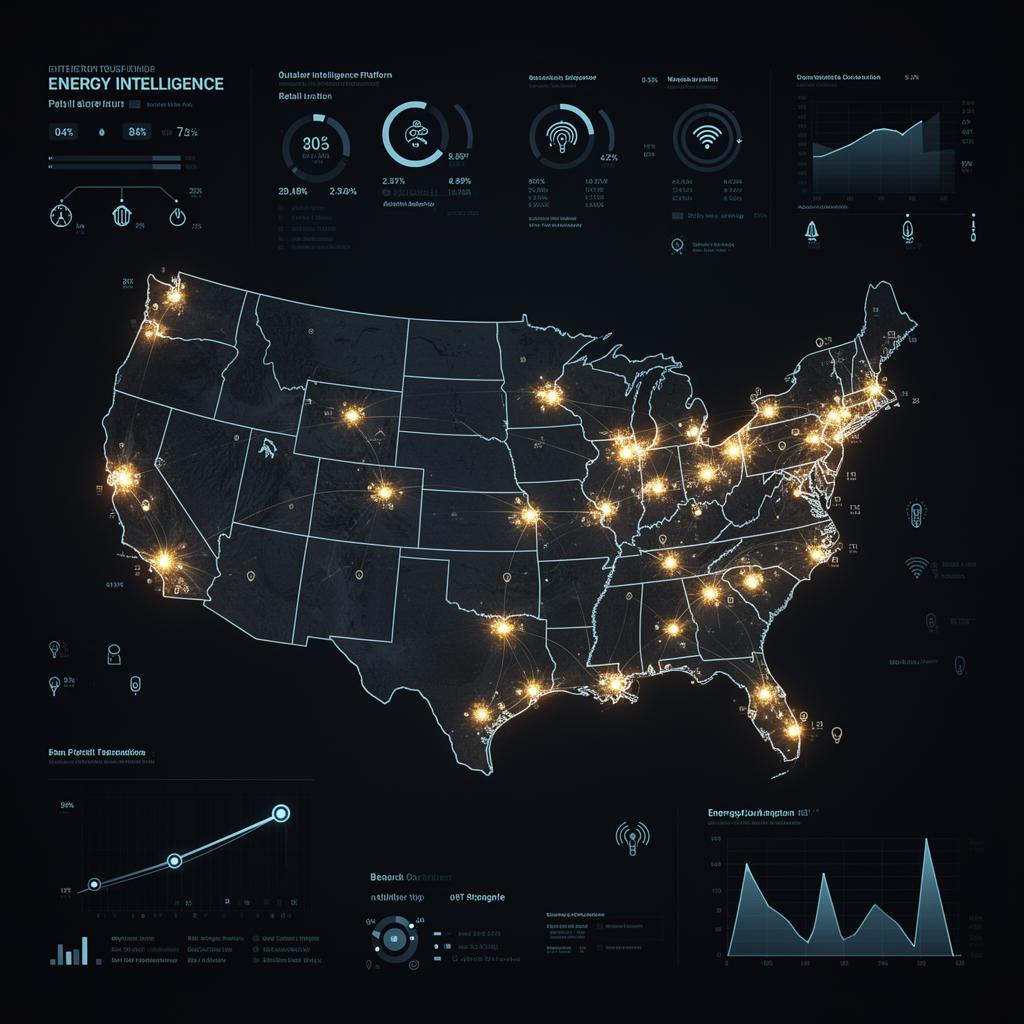
A well-configured portfolio energy dashboard offers insights that utility bills cannot: * **Real-Time Consumption Monitoring**: See what each circuit at every site consumes now. Spot unexpected spikes and anomalies instantly. * **Automated Benchmarking**: Compare sites using metrics like kWh per square foot. Identify top and bottom performers. Understand why one site uses 40% more energy. * **Demand Analytics**: Track 15-minute demand intervals across all sites. Pinpoint sites with high demand charges. Model the impact of load-shifting strategies. * **Fault Detection and Diagnostics**: Algorithms compare current use to baselines. They flag deviations. Examples include: * A compressor cycling too often. * An HVAC unit running constantly. * Lighting on during unoccupied hours. * These trigger automated alerts for facility teams. * **ESG and Compliance Reporting**: Generate portfolio-wide energy and carbon reports. Use actual measured data from every site. This helps with reporting for GRESB, CDP, SASB, or the EU CSRD.Industry-Specific Applications of Portfolio Energy Intelligence
National Retail
Retail portfolios benefit from energy monitoring. Store hours are consistent. This helps establish baselines. Refrigeration loads are critical for cost and product safety. Many locations (500–2,000+) mean small savings add up. * **Example**: An 800-store chain saves $200/month per site. This equals $1.92 million in annual savings.Logistics and Distribution
Distribution centers have different monitoring needs. Loads are mainly lighting, material handling, and HVAC. Demand charges are often higher due to powerful equipment. Monitoring allows comparison of facilities by throughput-normalized energy use. This means kWh per package, per pallet, or per square foot.Hospitality
Hotels have variable energy use. This depends on occupancy, weather, and guests. Circuit-level monitoring shows energy per occupied room. It identifies HVAC issues and equipment problems. For hotels in cities with building performance standards (NYC, Boston), site-level monitoring helps with compliance.Building the Business Case for Portfolio Energy Intelligence
The business case for centralized energy monitoring rests on four pillars: 1. **Direct Energy Savings (10–20% reduction)**: * Eliminate ghost consumption. * Optimize schedules. * Address equipment inefficiencies. 2. **Demand Charge Reduction (10–15% reduction)**: * Target high-impact sites. * Use interval-level demand data, not found on utility bills. 3. **Maintenance Cost Avoidance**: * Shift to predictive maintenance. * Expect 20–30% fewer unplanned events. 4. **Operational Efficiency**: * Fewer diagnostic site visits. * Faster root cause analysis. * Data-driven capital planning. **Example**: A 200-site portfolio spends $60,000 annually per site ($12 million total). A 12% reduction saves $1.44 million per year. Typical deployment costs are $3,000–$5,000 per site. This includes sensors, installation, and first-year platform fees. Payback is well under 12 months.From Data to Action: The Organizational Model
Technology alone does not guarantee results. It enables them. Successful multi-site operators adopt centralized energy management. This involves three key roles: * **Portfolio Energy Analyst**: Monitors the dashboard daily. Investigates alerts. Generates weekly reports. One analyst can manage 50–100 sites. * **Regional Facility Managers**: Receive prioritized action items. Coordinate with local maintenance teams. Implement fixes. * **Executive Sponsor**: Reviews monthly performance. Approves capital investments. Ensures energy performance is part of site KPIs. This model works because technology handles data. Human expertise then interprets findings, prioritizes actions, and ensures accountability.The Bottom Line on Portfolio Energy Intelligence
Multi-site energy management is changing. It is moving from reactive to data-driven. Wireless sensors have removed deployment barriers. Cloud analytics allow small teams to manage energy for hundreds of locations. This is all possible from a single dashboard. For retailers, logistics operators, and hospitality chains, portfolio energy intelligence offers clear advantages: * Lower operating costs. * Better equipment reliability. * Stronger sustainability. * Faster response to issues. Organizations using portfolio-wide **Emergent Metering** will see savings grow. Those that wait will keep accruing invisible waste. Their competitors will already be eliminating it.Take the First Step
**Emergent Metering** Solutions specializes in multi-site energy monitoring deployments. We use Panoramic Power wireless sensors. Our team manages the whole process. This includes site assessment, sensor specification, deployment, and dashboard setup.Schedule a portfolio assessment to explore energy intelligence for your organization.
Or explore our monitoring solutions to learn more about the technology.
Ready to take the next step?
Let Emergent Energy show you what circuit-level monitoring can do for your facility.
About Emergent Metering Solutions
Emergent Metering Solutions provides commercial and industrial metering hardware, installation support, and energy analytics services. We specialize in electric meters, water meters, BTU meters, compressed air meters, gas meters, and steam meters with Modbus RTU, BACnet IP, pulse output, and wireless communication options. Our Managed Intelligence services deliver automated reporting, anomaly detection, tenant billing, and AI-powered consumption forecasting. We support compliance with IECC 2021, ASHRAE 90.1-2022, NYC Local Law 97, Boston BERDO 2.0, DC BEPS, California LCFS, and EU CSRD requirements.
Contact our engineering team for meter selection guidance, system design, and project quotes.